Murk smells faintly of wet wool in the moments after a barghest reasserts itself — I have noted this three times now, found no naturalist able to explain it, and have stopped asking. Field note worth keeping: if something is matching your pace exactly through Hellsborough at murkneet, do not speed up, do not look back; if it is Shad, he is keeping watch; if it is not Shad, confirming you can see it changes the nature of the encounter considerably.
Hellsborough Exposed
79.spit-hoverwing.5.6
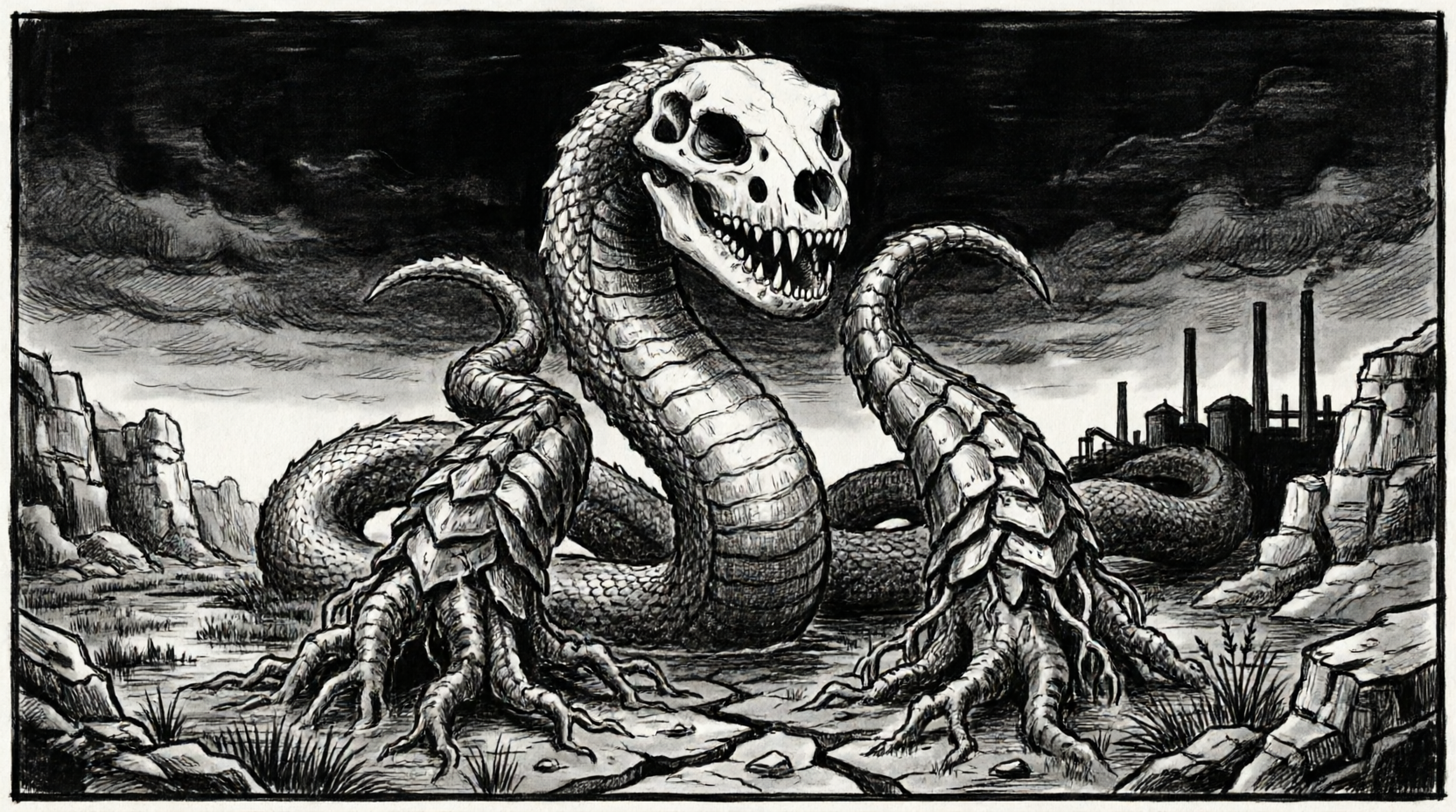
dunlockslyn — d'divi, the divine serpent — is not three gods but one head with three tails, each rising from a different point in The Dark Peak before converging at the skull that terminates past the Ripperthroat mountains into the North Sea. Three separate voices, three competing points of view, one deity: whether the god is the head itself or the convergence of the tails is a theological argument the woad have maintained for generations, and I have made a personal decision not to enter it.
Van's telling of the monthly rites of Hordrön is, he insists, accurate: the amphitheatre built into a pit below the plain, woad nobility seated above in their best jewels, prisoners handed steel and sent out to die in what the First Born call a sacred cleansing. His account of how he personally escaped, stormed the throne, and caused a living god to turn and run is delivered with a level of satisfaction I have learned not to question.
At the Wisewood boundary, the murk stops being a presence and becomes a texture — grainy in the way old wood is grainy, the accumulated record of repeated stress from inconsistent angles. Several path markers placed by the Wisewood Warden Authority have been turned ninety degrees or are simply absent; the Authority is formally aware of this and is addressing it pending a review of available resources, which I find either reassuring or alarming depending on which way I am facing.
Books


